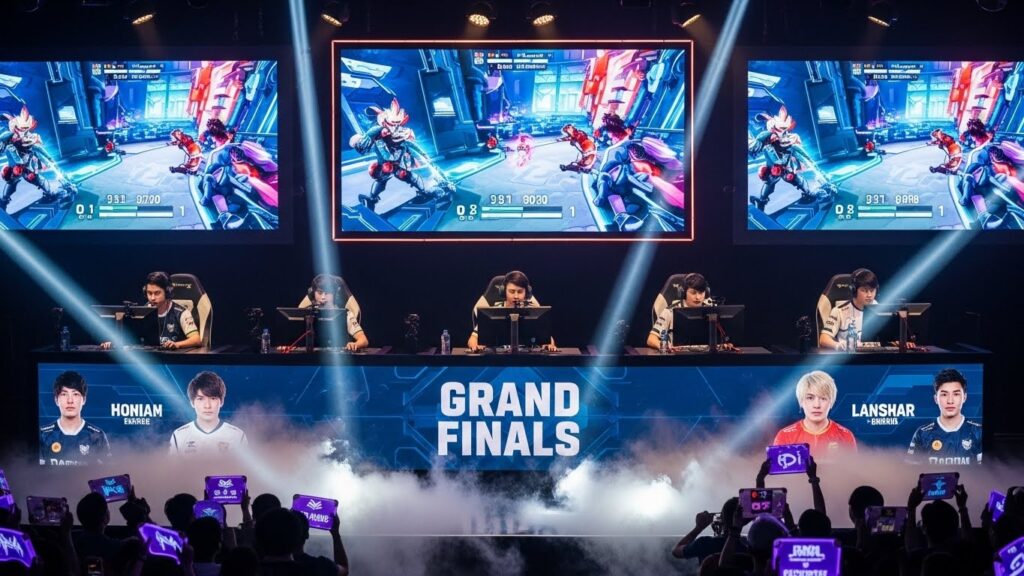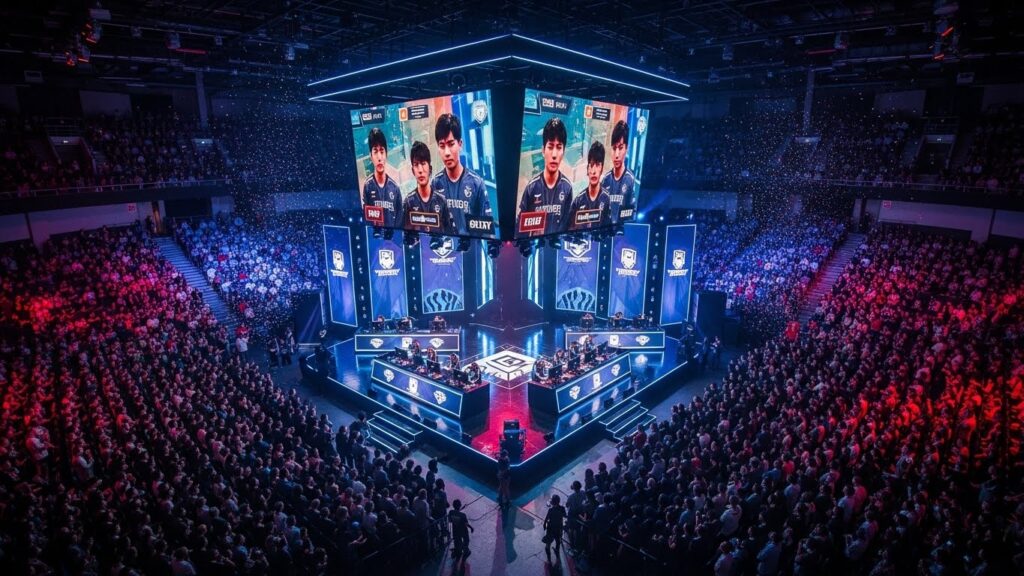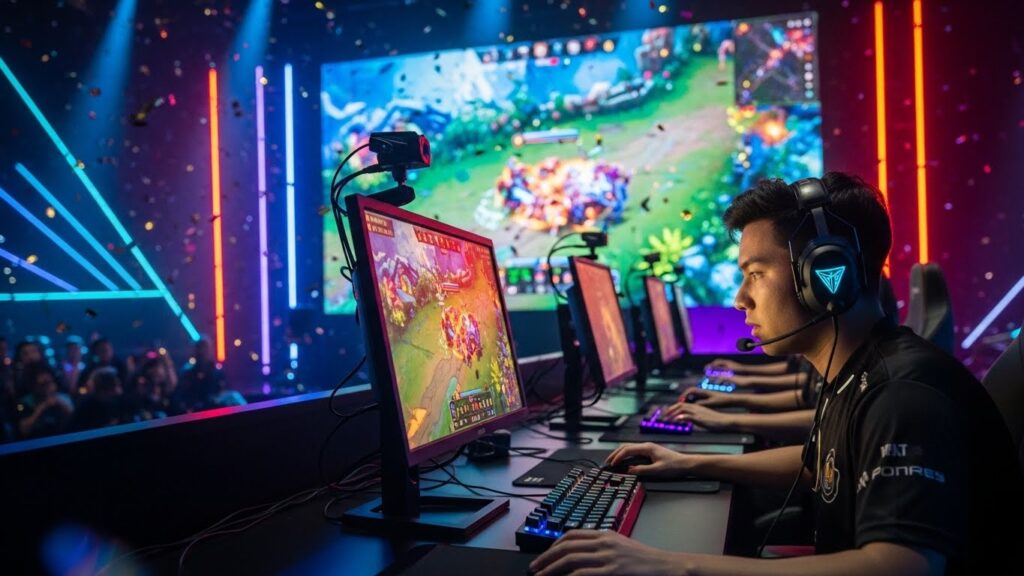
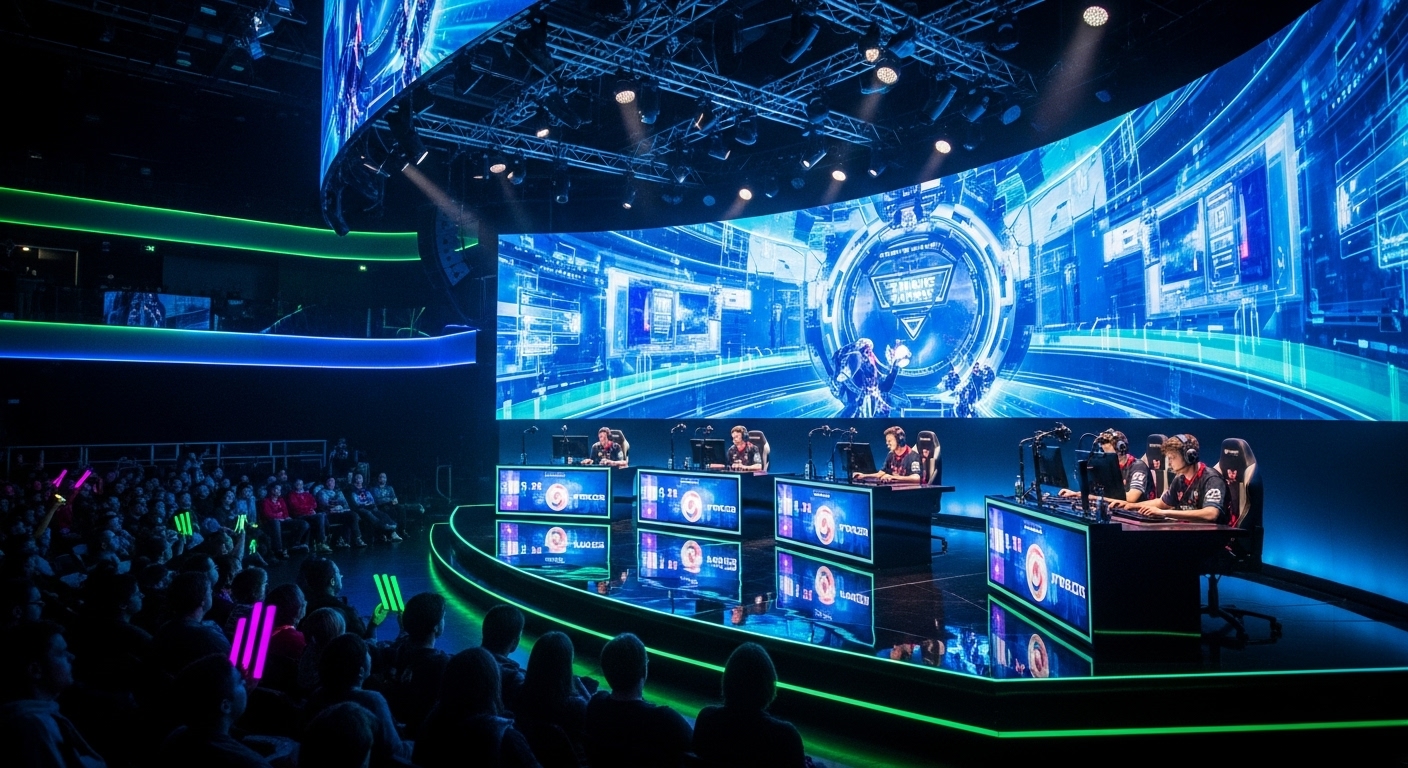
Esports has evolved into a global powerhouse in the world of entertainment, with millions of fans tuning in to watch live competitions, cheering for their favorite teams and players. What began as a niche hobby for a select group of gamers has now become a multi-billion-dollar industry, attracting sponsorships from major corporations, media outlets, and even professional sports organizations. The growth of esports has been nothing short of remarkable, and as technology continues to advance, the future of competitive gaming is brighter than ever.
In this blog post, we’ll explore the rise of esports, the factors behind its meteoric growth, the key players involved, and the impact it’s having on the world of entertainment and culture.
The Origins of Esports: From LAN Parties to Global Competitions
The story of esports dates back to the early days of online gaming in the 1990s, when gamers began to compete against one another over local area networks (LANs). Before the rise of the internet, multiplayer gaming was limited to local networks where players could connect through physical cables. These LAN parties, often held in basements or living rooms, were some of the first examples of competitive gaming. Games like Quake, Warcraft II, and StarCraft were popular choices, as they allowed players to test their skills in head-to-head matches.
In 1997, the first significant esports tournament took place: the Red Annihilation Tournament for Quake. The winner, Dennis “Thresh” Fong, became a legend in the gaming world, and the tournament garnered attention from both players and spectators. The idea of competitive gaming was starting to take root, but it wasn’t until the early 2000s that esports began to develop into the global phenomenon it is today.
The Explosion of Esports: The Role of Streaming and Online Communities
In the mid-2000s, the growth of broadband internet and streaming platforms helped push esports into the mainstream. One of the most important developments during this time was the launch of Twitch, a live-streaming platform dedicated to gaming. Launched in 2011, Twitch allowed gamers to broadcast their gameplay to a global audience, while also creating a space for fans to interact with one another in real-time. This gave rise to a new generation of esports fans who could watch tournaments, follow their favorite players, and even learn new strategies.
Twitch’s rise coincided with the explosion of League of Legends, Dota 2, Counter-Strike: Global Offensive, and other multiplayer online battle arena (MOBA) games that encouraged team-based competitions. These games became the backbone of esports, with developers providing regular updates, new content, and balance changes to keep the competitive scene fresh and engaging. League of Legends, in particular, became one of the most popular esports titles in the world, with its annual World Championship drawing millions of viewers from around the globe.
As streaming platforms like Twitch and YouTube Gaming grew in popularity, esports tournaments began to be broadcasted on a larger scale. Major events like The International, the League of Legends World Championship, and ESL One attracted sponsorships from multinational companies such as Coca-Cola, Intel, and Red Bull. With millions of dollars in prize pools and high-profile sponsors backing these tournaments, esports was becoming a legitimate and respected form of competition.
The Growth of Esports: From Amateur to Professional
As esports evolved, so did the players, teams, and organizations that made up the competitive landscape. What started as casual online play between friends soon gave rise to professional teams and players who dedicated their time and energy to mastering their respective games. In games like League of Legends, Counter-Strike, and Overwatch, professional players and teams formed organizations that trained, competed, and traveled the world to participate in major tournaments.
Esports organizations, such as Cloud9, T1, Fnatic, and Team Liquid, became household names, attracting top-tier talent and securing lucrative sponsorship deals. These teams invested in coaching staff, analysts, and team management to ensure their players were performing at the highest level. Just like traditional sports teams, esports organizations became businesses, with sponsorships, merchandise sales, and media rights providing significant revenue streams.
In addition to the organizations themselves, the role of coaches and analysts in esports grew in importance. These professionals help players develop strategies, analyze opponents, and improve individual skills. As the level of competition increased, so did the sophistication of team dynamics, with communication and teamwork becoming just as important as individual mechanical skill.
The professionalization of esports also led to the formation of dedicated leagues and tournaments. For example, the Overwatch League (OWL), which began in 2018, introduced a city-based league structure similar to traditional sports like the NBA or NFL. The Call of Duty League (CDL) followed suit, creating regional teams that compete in regular seasons and playoffs, adding a new layer of structure to the competitive scene.
The Financial Power of Esports: Big Business and Major Sponsorships
One of the most significant factors driving the growth of esports is its immense financial potential. Esports tournaments now offer prize pools that rival those of traditional sports events. The International 2018 for Dota 2 set a record with a prize pool of over $25 million, largely funded by the community through in-game purchases and crowdfunding. Prize pools like this attract top-tier talent and make esports an appealing career for competitive gamers.
In addition to the prize money, esports organizations generate significant revenue through sponsorships, advertising, merchandise, and media rights. Major companies, including brands like Mercedes-Benz, BMW, Nike, and Coca-Cola, have all partnered with esports teams and events to reach a younger, tech-savvy demographic. Esports has become a multi-billion-dollar industry, with projections indicating that its value will only continue to grow in the coming years.
The rise of esports has also had an impact on traditional sports. For example, several professional sports franchises, such as the NBA’s Philadelphia 76ers and the NFL’s Dallas Cowboys, have invested in esports teams or leagues. This crossover between esports and traditional sports has helped to legitimize esports in the eyes of the general public and has attracted even more mainstream attention.
Esports and Its Impact on Culture
Esports has become more than just a form of entertainment; it’s now an integral part of global pop culture. From the rise of gaming influencers and content creators to the increasing presence of esports in mainstream media, gaming culture has grown to encompass a wide array of activities, communities, and events.
Esports tournaments are now broadcast on television networks such as ESPN, and many major events are covered by mainstream sports outlets like BBC Sport and Fox Sports. This widespread media coverage has brought esports into the homes of millions of people who might not have considered gaming as a serious activity in the past. Additionally, esports has helped to normalize gaming as a legitimate hobby, breaking down stereotypes and making it accessible to a broader audience.
The impact of esports extends beyond gaming itself. Competitive gaming has influenced fashion, music, and even social movements. Many esports players have become celebrities, with their personal brands extending into merchandise, streaming, and endorsements. For example, players like Faker, Ninja, and Shroud have become household names, amassing millions of followers on social media platforms and YouTube. Their influence reaches far beyond the gaming community, with many esports stars becoming role models for young people around the world.
Furthermore, esports has become a powerful tool for social connection. Fans of esports teams often form tight-knit communities, supporting their favorite players and teams while engaging in online discussions, watching streams together, and participating in fan events. Esports has created a unique form of fandom that blurs the lines between spectatorship and participation, making it a highly interactive experience for its audience.
The Future of Esports: The Path Ahead
As esports continues to evolve, its future seems even more promising. With advances in virtual reality (VR), augmented reality (AR), and artificial intelligence (AI), the gaming experience is set to become even more immersive. VR and AR technologies could open up new frontiers for esports, offering fans and players alike the chance to experience competitions in a fully immersive environment. Similarly, AI could be used to enhance gameplay, creating more dynamic and challenging opponents for professional players.
Esports is also expanding into new territories. While Asia, Europe, and North America have been the dominant regions for esports, there is significant growth happening in Latin America, the Middle East, and Africa. These regions are seeing an influx of new players, teams, and fans, further solidifying esports as a global phenomenon.
In addition, esports will continue to develop as a career path. As the industry grows, so too will the opportunities for players, coaches, analysts, broadcasters, and event organizers. The increasing professionalization of esports will allow talented individuals to build sustainable careers within the industry, and as esports becomes a more established career choice, the level of competition will only increase.
Conclusion: Esports is Here to Stay
The rise of esports has been one of the most significant cultural and entertainment revolutions of the past decade. What started as a niche interest for gamers has transformed into a global industry that rivals traditional sports in terms of viewership, revenue, and influence. Esports has become a vital part of modern entertainment, bringing people together from all over the world to celebrate competition, teamwork, and gaming culture.
With continued growth and innovation, the future of esports looks incredibly bright. As technology continues to advance and new opportunities arise, esports will remain at the forefront of competitive gaming and digital entertainment, captivating audiences and changing the landscape of sports and culture for generations to come.