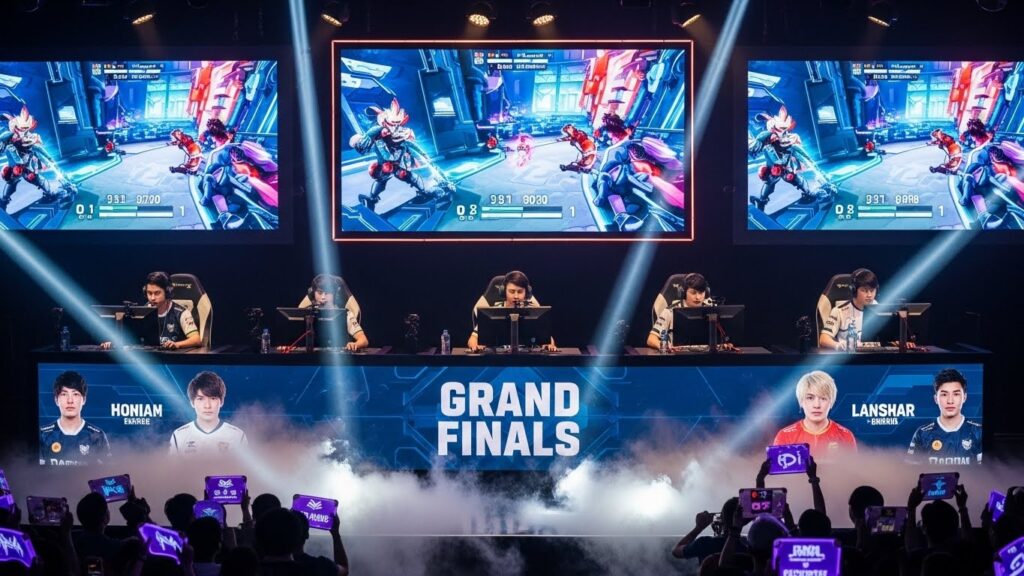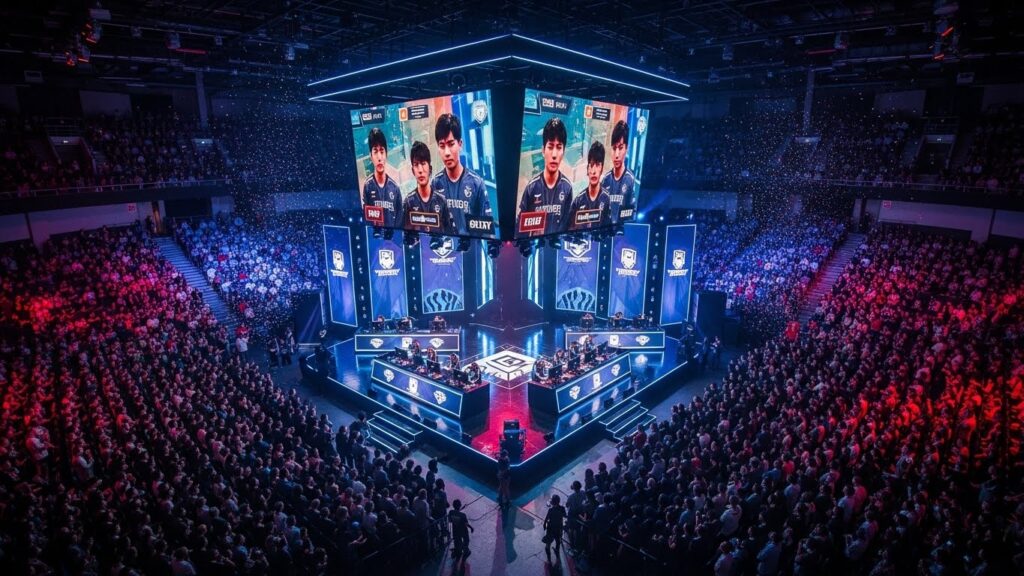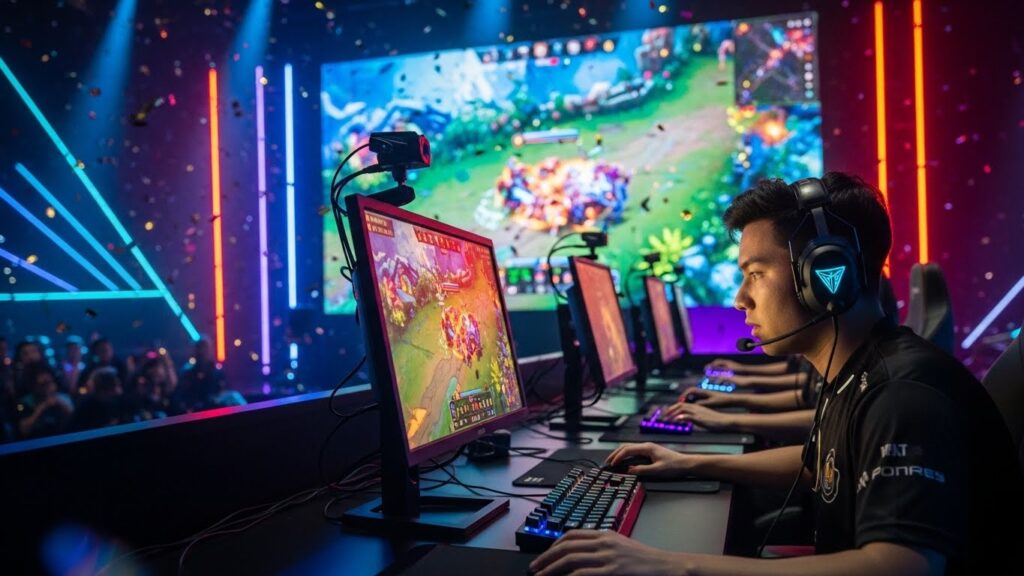
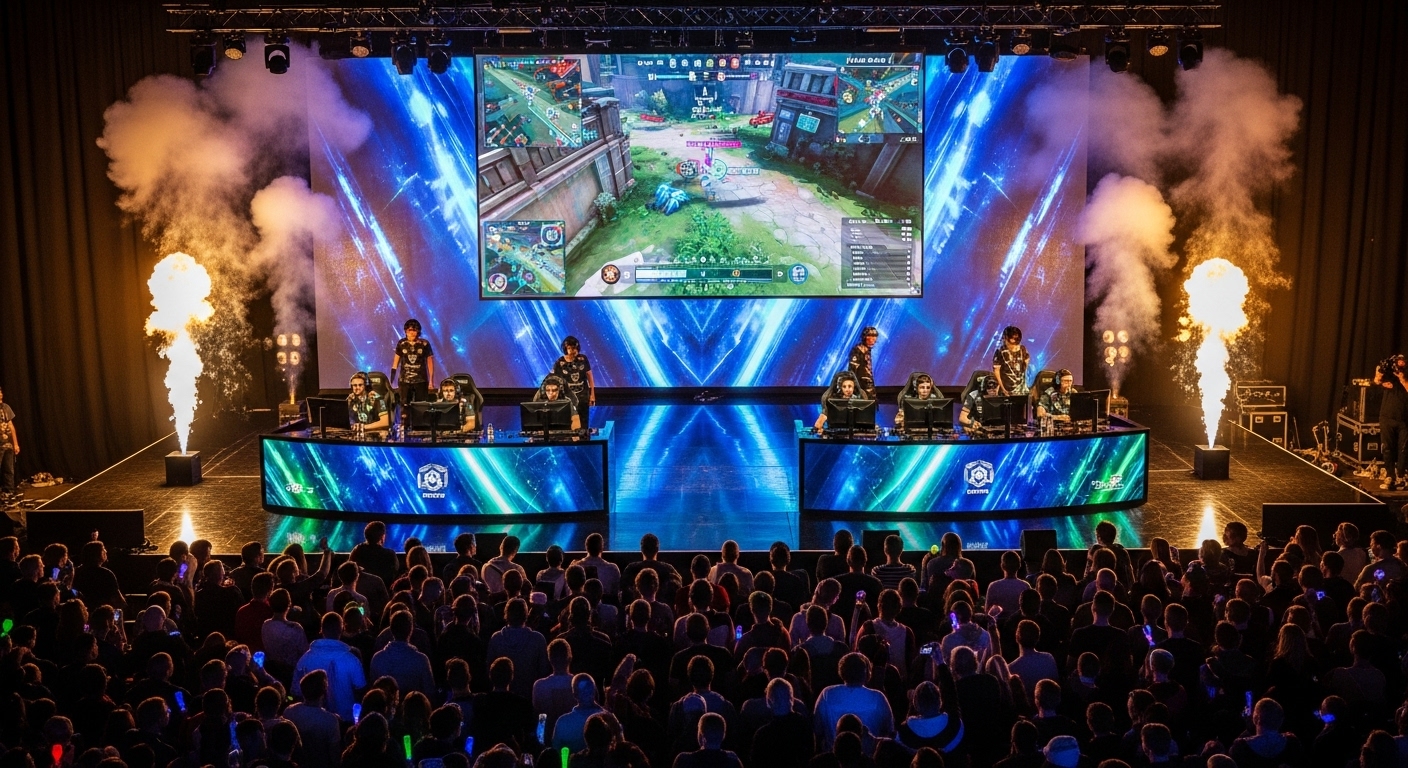
Esports, or competitive video gaming, has grown from a niche pastime into a global phenomenon that captivates millions of fans worldwide. Over the past two decades, esports has evolved from casual competitions in internet cafes to professional leagues with multi-million-dollar prize pools, dedicated stadiums, and celebrity players. This transformation has not only changed the landscape of gaming but also redefined the concept of sports in the 21st century.
The Early Days of Competitive Gaming
The roots of esports can be traced back to the late 1970s and 1980s, when arcade games like Space Invaders and Pac-Man first gained popularity. While these early competitions were small and localized, they laid the groundwork for organized gaming contests. The first recorded video game competition took place in 1972 at Stanford University for the game Spacewar, with students competing for a year’s subscription to a magazine.
By the 1990s, the rise of personal computers and the internet enabled more players to connect and compete. Games like Doom, Quake, and StarCraft became staples of early esports competitions, allowing gamers to showcase their skills in both local and online tournaments. During this period, esports was largely a grassroots movement, driven by dedicated communities rather than corporate sponsorships or mainstream media coverage.
The Emergence of Major Esports Titles
The early 2000s marked a turning point for competitive gaming. Games like Counter-Strike, Warcraft III, and StarCraft: Brood War began to establish themselves as professional esports titles. These games offered a combination of strategic depth, fast-paced gameplay, and strong community support, making them ideal for competitive play.
StarCraft, particularly in South Korea, became a national obsession. The country embraced esports on a level unseen anywhere else in the world. Television networks began broadcasting tournaments, players became celebrities, and gaming academies were established to train the next generation of professional players. This level of recognition and support set a precedent for the professionalization of esports worldwide.
The Role of Online Streaming in Esports Growth
While televised broadcasts were crucial in South Korea, the rise of online streaming platforms revolutionized esports on a global scale. Platforms like Twitch, YouTube Gaming, and Mixer allowed millions of fans worldwide to watch live tournaments and interact with players in real time. This not only increased the visibility of esports but also created new revenue streams through subscriptions, donations, and sponsorships.
Streaming also enabled amateur players to showcase their talents and gain recognition. Many professional esports players today started by streaming their gameplay online, building a following before being recruited by professional teams. This democratization of exposure helped broaden the talent pool and fueled the rapid growth of esports.
Esports as a Professional Career
One of the most significant changes in esports over the past decade is the emergence of professional careers. Top players can now earn substantial incomes through tournament winnings, sponsorship deals, and streaming revenue. In some cases, professional esports players earn salaries comparable to athletes in traditional sports leagues.
Professional teams and organizations have become highly structured, employing coaches, analysts, nutritionists, and psychologists to optimize player performance. Just like in traditional sports, esports requires rigorous training, strategic planning, and mental resilience. Players often practice for 8–12 hours a day, focusing on improving mechanics, teamwork, and communication skills.
The Global Esports Ecosystem
Esports is no longer confined to a few popular titles or regions. Today, it encompasses a diverse ecosystem of games, leagues, and tournaments. Popular esports titles include League of Legends, Dota 2, Fortnite, Call of Duty, Valorant, and Overwatch, each with its own dedicated fanbase and competitive scene.
Major tournaments such as The International, League of Legends World Championship, and EVO draw millions of viewers and offer prize pools that rival traditional sports events. Sponsorship deals from global brands, advertising revenue, and merchandise sales contribute to the financial sustainability of esports organizations.
Moreover, esports has a significant impact on regional economies. Hosting tournaments and establishing esports arenas create jobs, drive tourism, and promote technological development. Cities around the world now recognize esports as a legitimate industry, integrating it into their economic and cultural strategies.
Esports and Education
The rise of esports has also influenced education. Many universities now offer scholarships for esports players, similar to traditional sports scholarships. These programs provide players with access to training facilities, coaching, and academic support, while allowing institutions to tap into the growing interest in gaming.
High schools and youth organizations have also embraced esports as a way to engage students in teamwork, strategy, and critical thinking. Competitive gaming can foster skills such as communication, problem-solving, and decision-making under pressure. As a result, esports is increasingly viewed as a valuable educational tool rather than just a recreational activity.
Challenges Facing the Esports Industry
Despite its rapid growth, esports faces several challenges. One of the primary concerns is the physical and mental health of players. Extended hours of practice and high-pressure competition can lead to burnout, repetitive strain injuries, and mental health issues such as anxiety and depression. Organizations are beginning to address these issues through wellness programs and time management strategies, but there is still room for improvement.
Another challenge is the lack of standardized regulation. Unlike traditional sports, esports does not have a unified governing body. This can lead to inconsistencies in rules, tournament organization, and player contracts. Additionally, issues such as cheating, match-fixing, and toxic behavior in online communities pose ongoing threats to the integrity of competitive gaming.
The Future of Esports
The future of esports looks promising, with continued growth expected in both viewership and revenue. Emerging technologies such as virtual reality, augmented reality, and artificial intelligence could further enhance the esports experience, making it more immersive and interactive for players and fans alike.
Esports is also likely to expand into new markets, particularly in regions such as South America, Southeast Asia, and Africa, where gaming culture is rapidly developing. Mobile esports, driven by games on smartphones and tablets, is becoming a major segment, making competitive gaming more accessible to a broader audience.
Moreover, esports may increasingly intersect with traditional sports. Collaborations between esports organizations and sports franchises are already happening, with cross-promotional events, co-branded content, and shared sponsorship opportunities. This integration could help esports gain further legitimacy and reach new audiences.
Cultural Impact of Esports
Beyond the economic and professional aspects, esports has had a profound cultural impact. It has redefined the perception of gaming, showing that it is not just a hobby but a competitive skill that requires dedication, strategy, and teamwork. Esports has also created a global community, connecting players and fans across continents through shared experiences and live events.
Esports influences fashion, music, and entertainment, with players becoming cultural icons and tournaments serving as major social events. The rise of esports celebrities has also challenged traditional notions of fame, showing that digital platforms can rival television and film in shaping public attention.
Conclusion
Esports has evolved from humble beginnings in arcades and internet cafes to a global industry that rivals traditional sports in popularity and influence. Its journey reflects the power of technology, community, and creativity, and it continues to break barriers in professional careers, education, and culture.
While challenges such as player health, regulation, and integrity remain, the future of esports is filled with opportunities for innovation, expansion, and cultural impact. As esports continues to grow, it is not just transforming the world of gaming—it is reshaping the very definition of competition and entertainment in the digital age.