
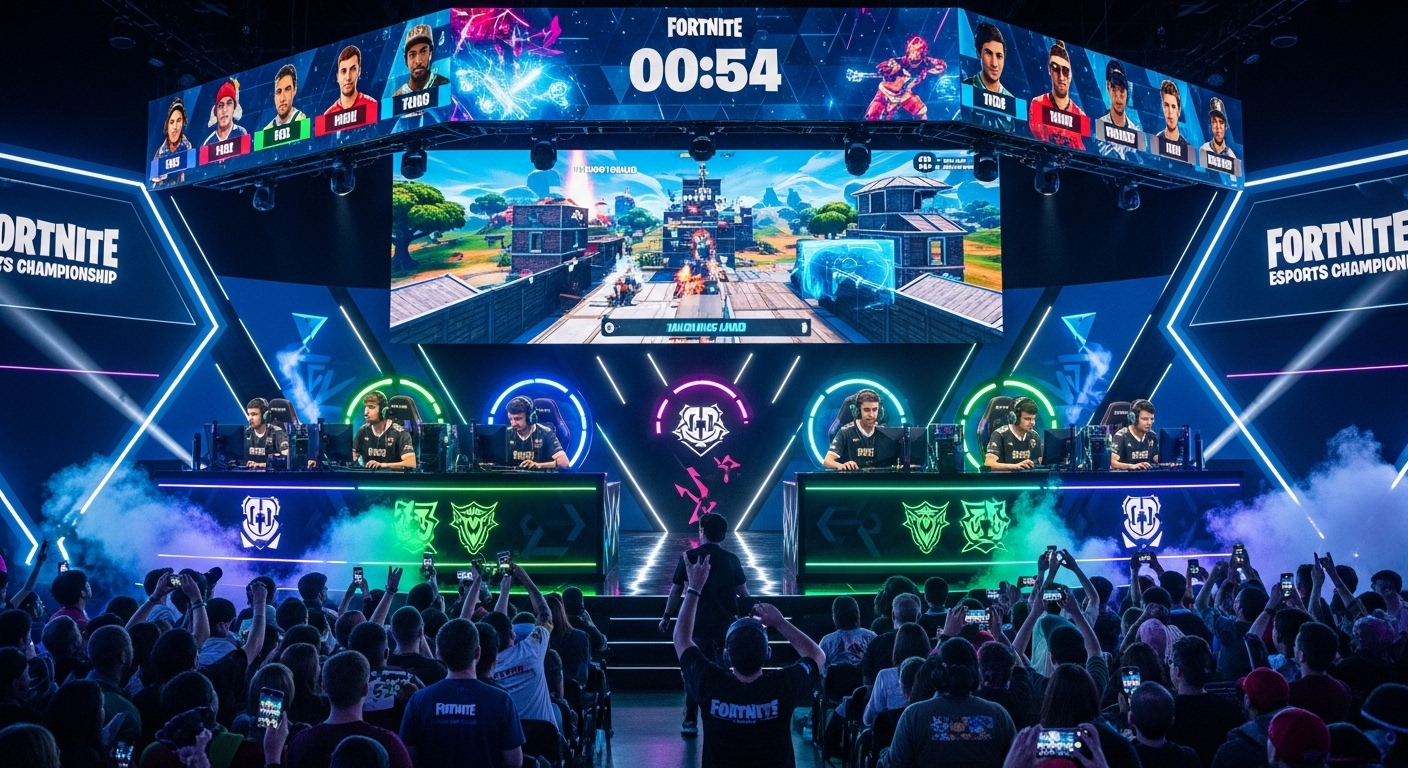
Introduction
Since its release in 2017, Fortnite has been more than just a game—it’s been a cultural phenomenon. Epic Games’ flagship title revolutionized the battle royale genre, blending fast-paced shooter mechanics with unique building elements, creating something entirely fresh in the competitive gaming space. But beyond being a casual playground for millions, Fortnite also made its mark in the esports world.
From the $30 million Fortnite World Cup 2019 to ongoing seasonal tournaments and influencer-led competitions, Fortnite esports has had moments of glory. Yet, as the competitive gaming industry matures, many ask: Is Fortnite esports here to stay, or is it destined to fade away as just a passing trend?
This blog takes a deep dive into Fortnite’s esports ecosystem, its successes, challenges, and future prospects.
The Rise of Fortnite Esports
Fortnite’s Unique Competitive Edge
Unlike other popular esports titles such as League of Legends, Dota 2, or Counter-Strike: Global Offensive, Fortnite introduced mechanics never before seen at the highest competitive level. Its blend of shooting, resource gathering, and building mechanics made competitive play unpredictable, highly strategic, and visually entertaining.
This innovation attracted both casual gamers and professional players, blurring the lines between mainstream entertainment and esports.
The Fortnite World Cup
In July 2019, Epic Games hosted the Fortnite World Cup in New York City, offering an unprecedented $30 million prize pool—one of the largest in esports history. The event instantly validated Fortnite as a competitive powerhouse.
Notable highlights included:
- Kyle “Bugha” Giersdorf, a 16-year-old player, winning $3 million in the Solo Finals.
- Millions tuning in via Twitch, YouTube, and Fortnite’s in-game spectator mode.
- Global representation, with players from North America, Europe, Asia, and beyond.
The World Cup solidified Fortnite’s potential as a premier esports title.
Fortnite Esports Ecosystem
Online Tournaments and FNCS
With the global pandemic in 2020, offline esports events struggled, but Fortnite adapted quickly. Epic launched the Fortnite Champion Series (FNCS), a seasonal tournament circuit held entirely online. FNCS became the backbone of Fortnite esports, giving players regular opportunities to compete and earn recognition.
Key features of FNCS:
- Divisions for solo, duo, and squad play.
- Regional competitions across North America, Europe, Oceania, Asia, and South America.
- Multi-million-dollar prize pools each season.
Community-Driven Events
In addition to official FNCS tournaments, Fortnite thrives on third-party events hosted by content creators, esports organizations, and brands. Celebrity-driven events like the Pro-Am tournaments (featuring Ninja, Marshmello, and Drake) blurred the line between esports, pop culture, and entertainment.
These collaborations made Fortnite esports appealing not only to hardcore fans but also to casual audiences.
Challenges Facing Fortnite Esports
Despite its early triumphs, Fortnite esports hasn’t had an entirely smooth journey. Several hurdles have raised concerns about its long-term sustainability.
1. Gameplay Complexity and RNG
Fortnite’s unique mechanics are both a blessing and a curse. The game’s random loot system (RNG) can impact competitive fairness, as luck often determines weapon drops and positioning. Additionally, the high-skill ceiling in building mechanics creates steep barriers for newcomers.
Compared to structured esports like CS:GO or LoL, Fortnite can feel less predictable, making it harder to standardize competitive integrity.
2. Shifting Player Base
Fortnite remains hugely popular, but its casual player base has shown fluctuations. With each new gaming trend—whether it’s Among Us, Valorant, or Apex Legends—some players migrate. This volatility makes it difficult to sustain a long-term competitive ecosystem.
3. Epic Games’ Control
Unlike Riot Games with League of Legends or Valve with Dota 2, Epic Games maintains tight control over Fortnite esports. Prize pools, tournament rules, and schedules are entirely dictated by Epic, leaving little room for third-party leagues or grassroots ecosystems.
While this ensures consistency, it also limits diversity and longevity compared to open circuits.
4. Viewer Experience
For new audiences, watching competitive Fortnite can be overwhelming. With 100 players on a shrinking map, the chaotic action and constant building can be hard to follow. Unlike sports such as Overwatch League or Call of Duty League, Fortnite has struggled to streamline its spectator experience for mass audiences.
Why Fortnite Esports Still Matters
Despite the hurdles, Fortnite esports continues to thrive in several key ways.
1. Massive Audience Reach
Fortnite remains one of the most streamed and watched games on Twitch and YouTube. High-profile tournaments still draw millions of viewers globally. The crossover appeal with music, fashion, and film (Travis Scott’s concert, Marvel collaborations) keeps the game relevant across multiple industries.
2. Accessibility for Players
Unlike some esports that require years of grinding, Fortnite’s free-to-play model and widespread platform availability (PC, console, mobile) make it more accessible. Anyone with talent can rise through the ranks, which keeps the competitive scene fresh and unpredictable.
3. Youth Appeal
Fortnite is especially popular with younger demographics. For Gen Z and Gen Alpha, Fortnite is not just a game—it’s a social platform. This younger audience ensures a pipeline of future competitors and fans, essential for esports longevity.
4. Epic Games’ Commitment
Despite criticism, Epic Games continues to invest heavily in Fortnite esports. The FNCS prize pools, in-game broadcasts, and updates to competitive playlists prove that Fortnite is not being abandoned anytime soon.
Comparing Fortnite Esports to Other Titles
To understand whether Fortnite esports is here to stay, it’s helpful to compare it with other competitive titles.
- League of Legends (LoL): Established global leagues, franchised teams, and consistent yearly world championships.
- CS:GO / Counter-Strike 2: Decades-long legacy, grassroots tournaments, and Valve-sponsored majors.
- Valorant: Riot-backed infrastructure, early franchising, and structured competitive circuits.
- Fortnite: High prize pools, massive cultural reach, but less structured league system.
While Fortnite lacks the rigid structure of LoL or Valorant, its appeal lies in event-based hype and cross-industry integration.
The Future of Fortnite Esports
Potential Growth Areas
- Franchised Leagues: If Epic Games adopts a franchised league model similar to Riot’s esports structure, Fortnite could gain long-term stability.
- Improved Spectator Tools: Making competitive matches easier to follow could boost mainstream viewership.
- Collaboration with Brands: Continued partnerships with music, film, and fashion industries could keep Fortnite unique in the esports world.
- Grassroots Ecosystem: Allowing third-party organizers to host more events could expand Fortnite’s reach beyond Epic-led tournaments.
Risks Ahead
- Declining Hype: Without marquee events like the World Cup, Fortnite risks losing esports visibility.
- Competition from Other Titles: Emerging esports titles (like Valorant or Apex Legends) could siphon players and viewers.
- Casual vs. Competitive Divide: Fortnite’s casual fun might always overshadow its esports scene, preventing it from becoming a “serious” esport.
SEO Keyword Integration
To optimize this article for search engines, here are primary and secondary keywords used throughout:
- Primary Keywords: Fortnite esports, Fortnite competitive scene, Fortnite tournaments, Fortnite World Cup, FNCS, is Fortnite esports dying, future of Fortnite esports
- Secondary Keywords: Epic Games esports, Fortnite prize pools, competitive Fortnite players, Fortnite streaming, Fortnite viewership
These terms target both casual readers curious about Fortnite’s esports future and competitive players searching for in-depth insights.
Conclusion: Is Fortnite Esports Here to Stay?
So, is Fortnite esports here to stay? The answer lies in balance. While Fortnite may never achieve the same structured stability as League of Legends or CS:GO, it occupies a unique space in the esports ecosystem. Its blend of pop culture influence, accessibility, and massive events ensures it remains relevant.
The future depends heavily on Epic Games’ willingness to adapt, evolve, and invest in the competitive ecosystem. If Epic embraces long-term structures, improves viewer experiences, and leverages Fortnite’s unmatched cultural reach, Fortnite esports could very well become a mainstay.